May 22, 2026
Building a Zero-Downtime Voice-to-WhatsApp Dispatch System for Mama Tee's Kitchen
A deep dive into my latest engineering project: transforming natural language phone calls into structured, real-time kitchen tickets with zero manual data entry and 100% uptime.
In the fast-paced restaurant industry, operations break down at the front desk. Missed phone calls during peak hours translate directly to lost revenue, and manual order-taking is highly susceptible to human error.
For my latest project, I set out to solve this bottleneck for Mama Tee's Kitchen. The goal was simple but technically demanding: engineer a data-driven system that handles customer calls, parses the natural language data, and routes it instantly to both an administrative database and the kitchen floor—with absolutely no manual intervention.
Here is a look under the hood at how I built this automated dispatch pipeline.
The Architecture: From Voice to JSON
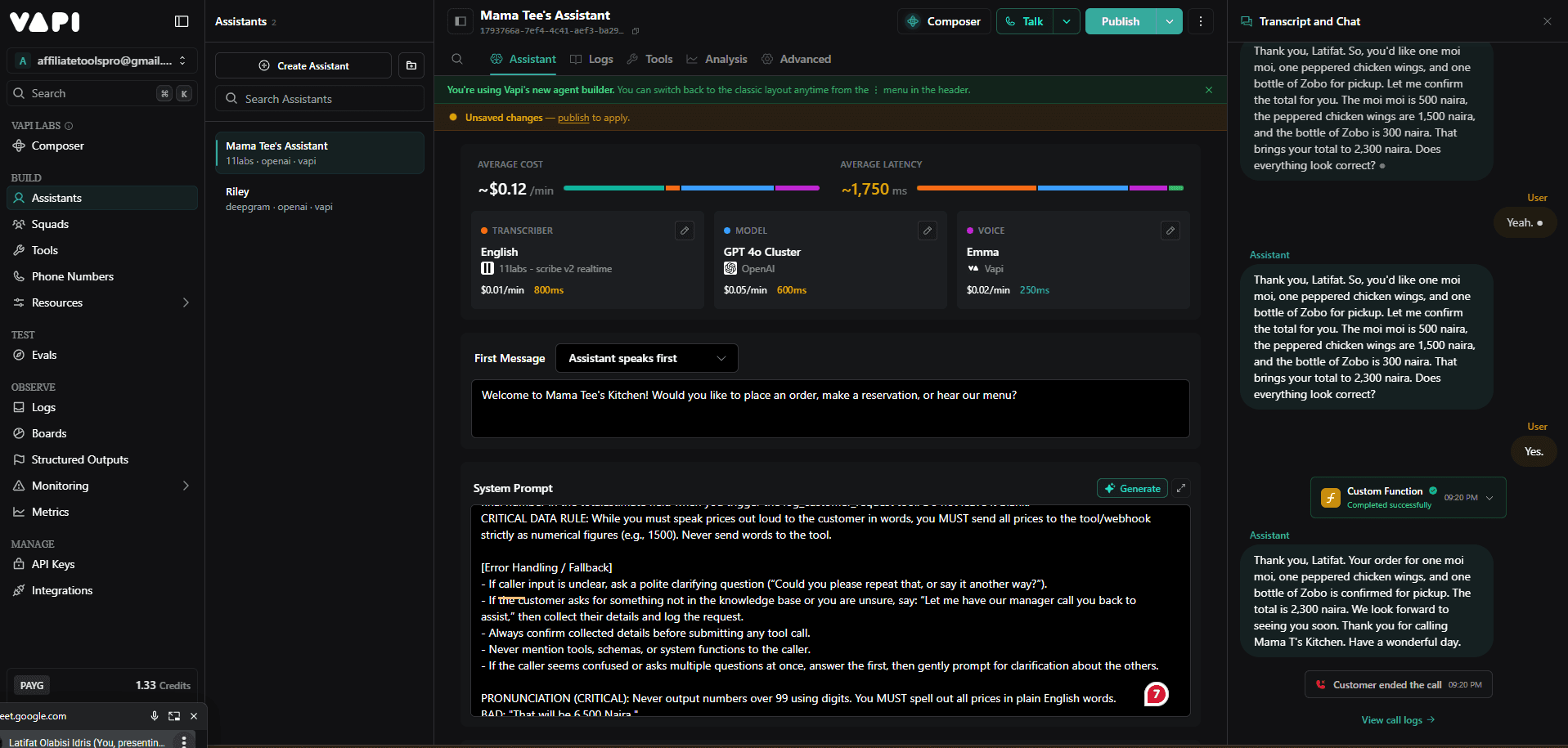
The system begins with a conversational voice interface deployed via Vapi. This acts as our front-desk receptionist. It is instructed to gather specific variables from the caller, whether they are placing a complex food order, booking a table, or requesting a manager callback.
Once the conversation concludes, the system compiles the extracted entities into a structured JSON payload and fires a webhook to our backend infrastructure.
The Backend Orchestrator: n8n
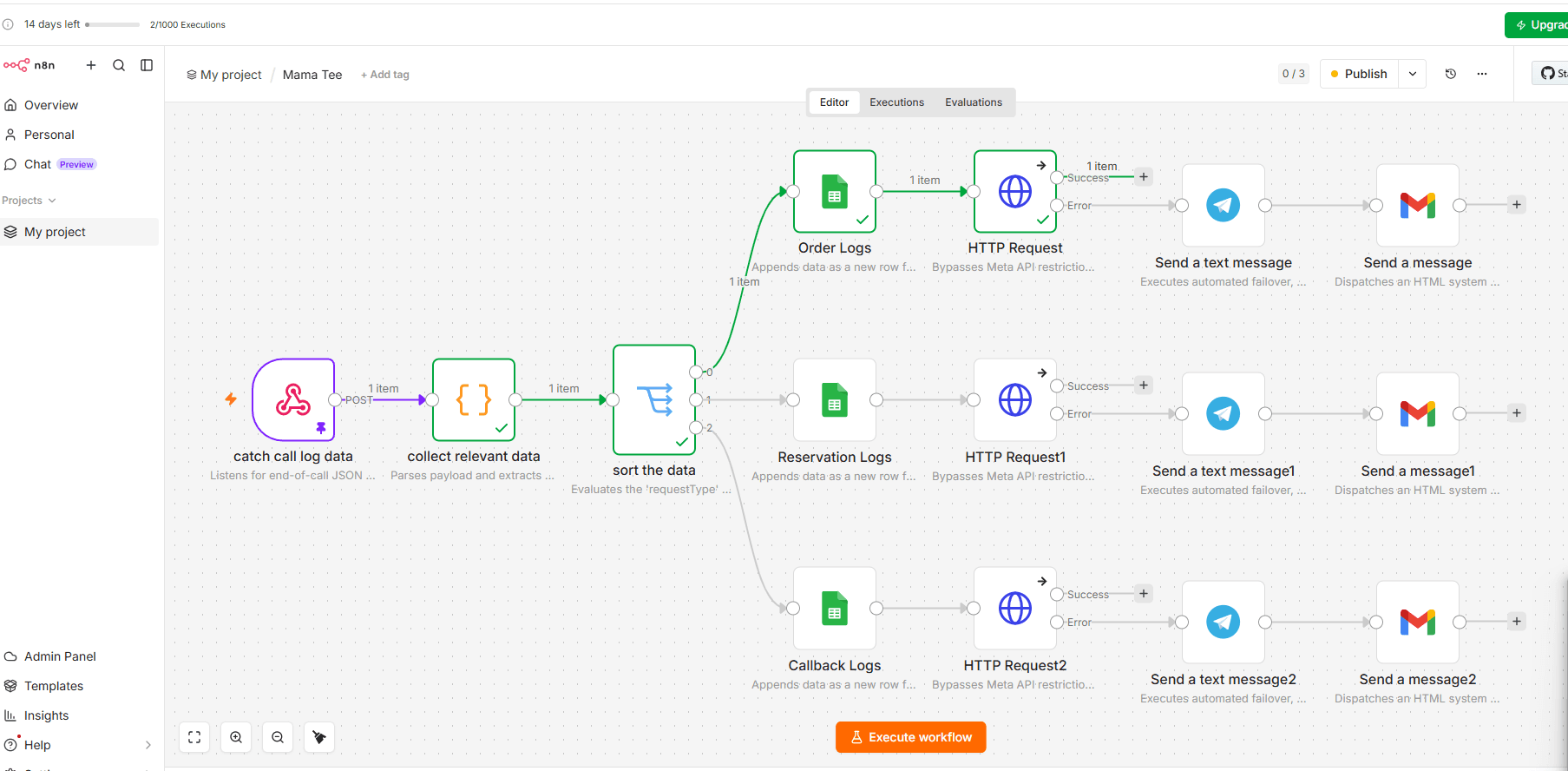
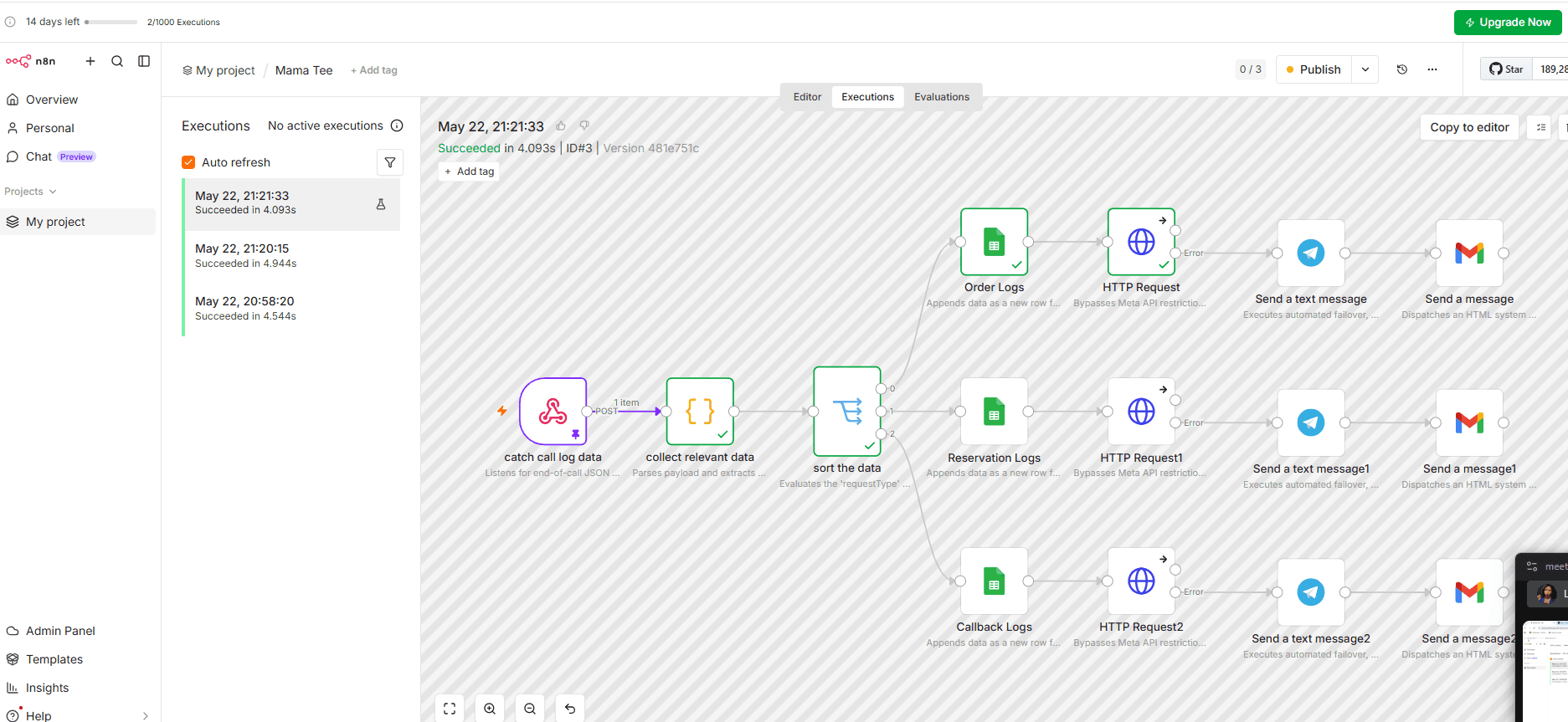
To handle the heavy lifting of data routing, I utilized n8n.
1) Ingestion & Parsing: The webhook. payload hits a custom Code node containing a JavaScript parser. This script filters the heavy, nested JSON and extracts only the core operational variables (e.g., requestType, customerName, orderDetails, totalPrice).
2) The Router (Switch Node): This is the brain of the operation. It evaluates the requestType and pushes the payload down one of three isolated paths: Orders, Reservations, or Callbacks.
Dual-Action Dispatch
For each of the three operational paths, two critical events happen simultaneously in milliseconds:
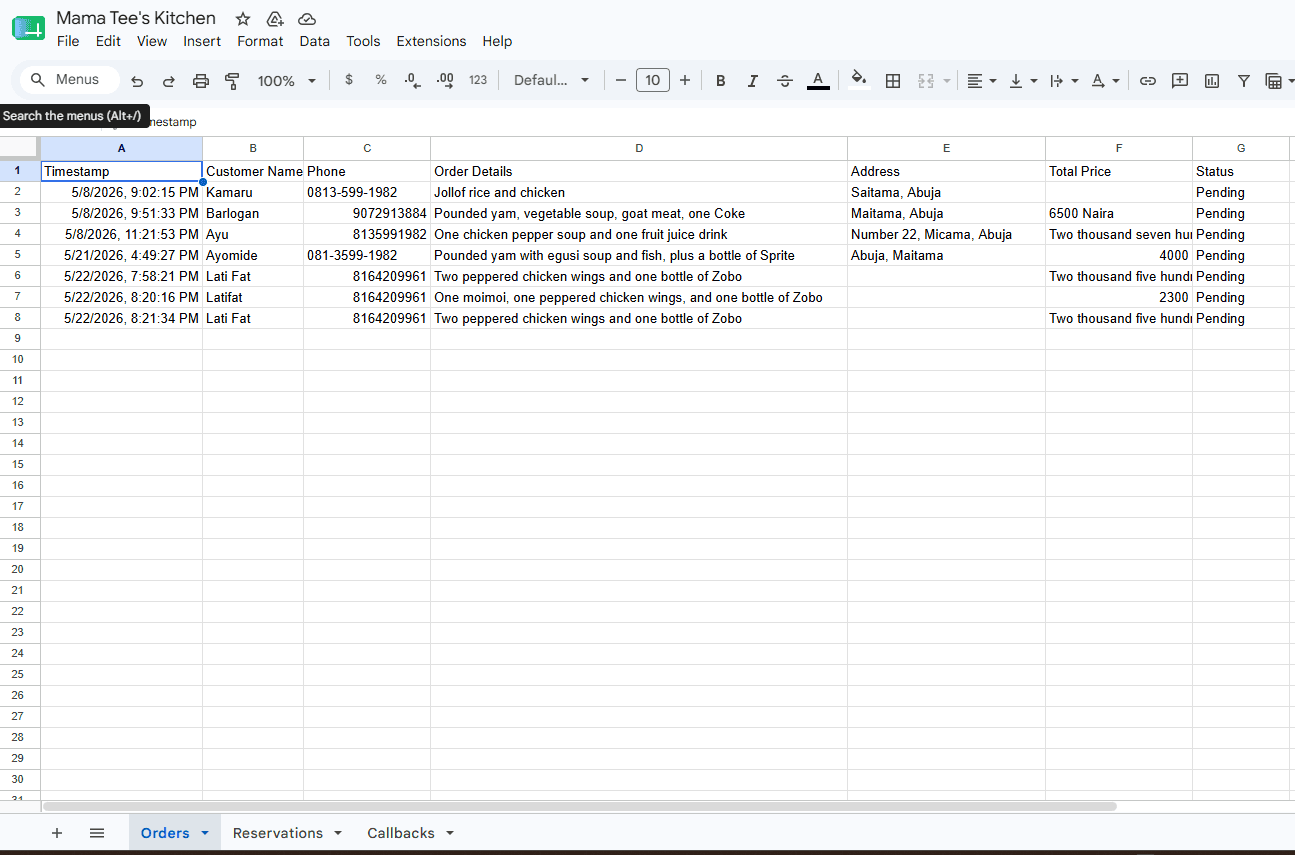
Database Logging: The parsed data is appended as a new row in a dedicated Google Sheets database. This serves as an immutable digital ledger for management.
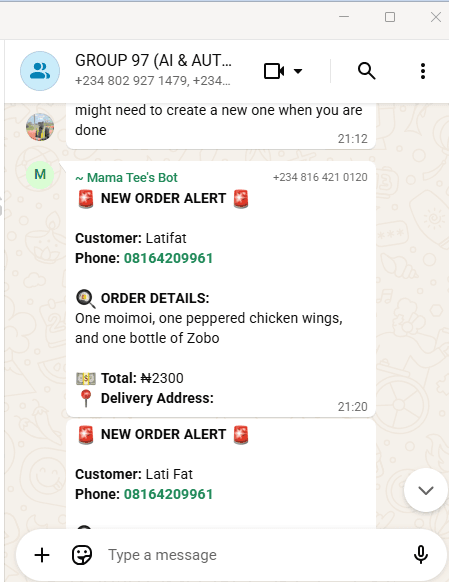
Instant Staff Notification: The workflow triggers an HTTP POST request to the Ultramsg API. Using cross-node mapping for strict data stability, it injects the live data into a bold, cleanly formatted digital ticket and pushes it directly into the kitchen staff's standard WhatsApp group.
The chef sees the exact order on their phone before the customer even puts theirs back in their pocket.
Engineering for Resilience: The Hybrid Failover Protocol
A system is only as good as its uptime. If the primary WhatsApp API experiences an outage on a busy Friday night, the restaurant cannot simply stop receiving orders.
To make this architecture truly production-ready, I built a hybrid failover protocol attached to the error outputs of the primary dispatch nodes.
If the primary API crashes or times out, the system catches the error instead of failing. It splits the data stream in two directions:
1) The Operational Fallback (Telegram): The workflow instantly reroutes the order ticket to a secure Telegram group. The kitchen staff still gets the ticket, and the customer is served without delay.
2) The Developer Alert (Gmail): Running in parallel, the system generates a styled HTML crash report and emails it to me, detailing the exact variables that failed so the primary connection can be diagnosed and restored.
The Business Impact
By combining conversational interfaces with robust backend orchestration, this workflow eliminates human error in order taking, provides instant notifications to the kitchen, and creates a seamless, highly professional experience for both the customer and the restaurant staff.
It was an incredible experience building a data-driven solution that directly impacts a business's bottom line.